Which Bank of America Travel Card Fits How You Actually Travel
The issuer's travel lineup splits along annual fee, redemption flexibility, and benefit depth. Matching the card to your travel pattern matters more than the headline rate

The Answer First
Bank of America travel cards differ mainly in annual fee and benefit depth. The Bank of America® Travel Rewards credit card is a no annual fee option for travelers who want flexible rewards without an annual cost, while premium options offer additional travel benefits for cardholders who will use them. BofA Rewards™ can also affect how much eligible cards earn, so your relationship tier is another factor to consider.
How to Choose a Bank of America Travel Credit Card
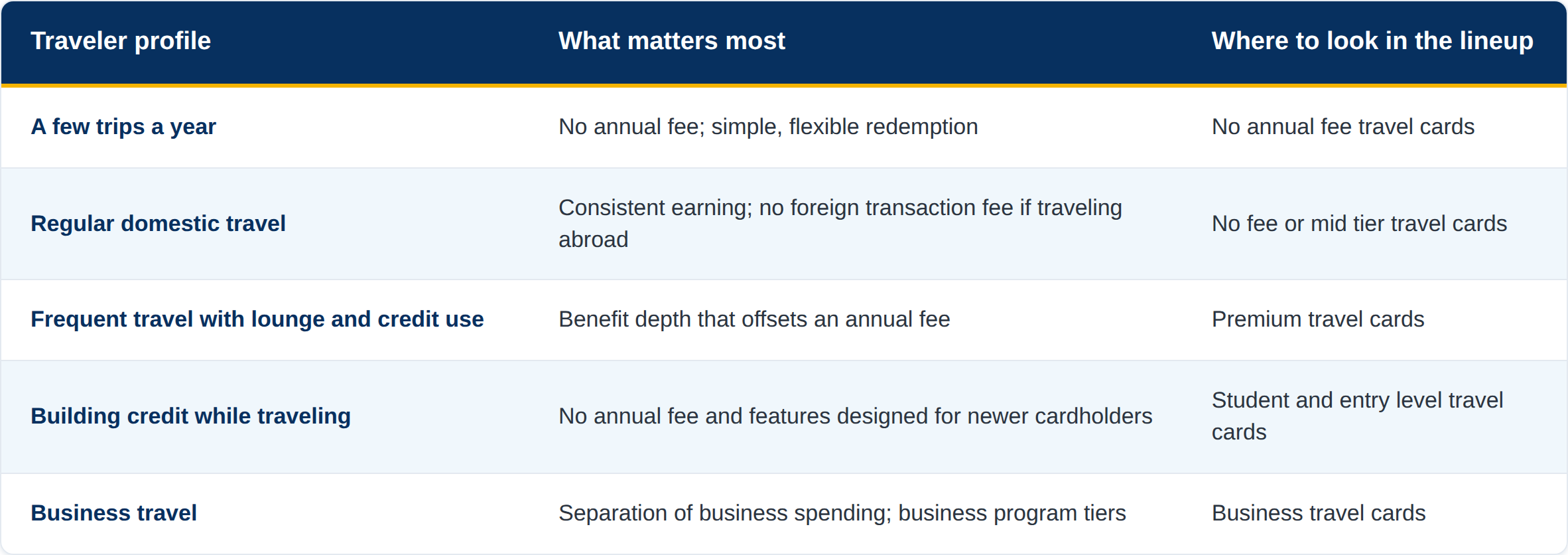
Travel card comparisons tend to lead with earn rates, which is the least decisive variable within a single issuer's lineup. Within the Bank of America range, the earn rates are relatively close. What separates the cards is the annual fee, the benefits attached, and whether those benefits match how you travel.
A benefit you don't use is worth nothing, regardless of its stated value. The honest version of this comparison starts with your travel pattern and works backward.
When a No Annual Fee Travel Card Makes Sense
Benefits of a No Annual Fee Travel Card
A no fee travel card often earns at a flat rate and typically applies rewards to travel purchases, avoiding the complexity of an airline or hotel program. With no annual fee, there is no annual fee cost to offset when evaluating the card's rewards and benefits.
When a No Annual Fee Travel Card May Fall Short
It will not carry lounge access, meaningful travel credits or the deeper protections attached to premium products. Frequent travelers who value those benefits may prefer a premium travel card.
Who Should Consider a No Annual Fee Travel Card?
Occasional travelers, anyone unwilling to manage credits and benefit calendars, and cardholders who want travel rewards without an annual renewal decision.
When Does a Premium Travel Card Make Sense?
Is a Premium Travel Card Worth the Annual Fee?
A premium travel card may make sense when the credits and benefits you expect to use help offset the annual fee. Compare those benefits with the annual fee and with what you would receive from a no annual fee option.
How to Value Travel Card Credits
Consider how likely you are to use each travel credit based on your existing travel habits. Credits that require a specific booking channel, purchase type or time period may be less useful if they do not align with how you normally travel.
Which Premium Travel Benefits Matter Most?
Premium travel cards may offer benefits such as lounge access, travel protections and elevated rewards on travel and dining. Consider which of these benefits you are likely to use when comparing the additional benefits with the annual fee.
How to Compare Travel Benefits With the Annual Fee
Write down the credits and benefits offered by the card and identify which ones you have used or expect to use based on your existing travel habits.
Compare the value those benefits provide to you with the card's annual fee and the benefits available from a no annual fee option. This can help determine whether a premium card aligns with how you travel.
How BofA Rewards™ Affects Travel Credit Cards
The issuer's relationship program applies a multiplier to eligible cards' base earnings. Because it lifts the whole lineup proportionally, it rarely changes which card is right for you. What it changes is the margin.
- A higher tier raises the return on the no fee card too, so it does not automatically justify moving to a premium product.
- The multiplier generally applies to base rates, not promotional rates. Confirm the treatment before projecting a first year return.
- Business cards sit under a separate program with its own tiers. Do not apply consumer figures to them.
Do Bank of America Travel Cards Have Foreign Transaction Fees?
For travel outside the country, the presence or absence of a foreign transaction fee often matters more than the earn rate. A card earning slightly more per dollar but charging a percentage on every foreign purchase can easily return less overall on an international trip. Check this on the specific card rather than assuming it across the lineup.
How to Choose the Right Bank of America Travel Card
- Count your trips. Use last year's actual travel, not your intended travel.
- Identify where you travel. International travel raises the weight of foreign transaction fees and acceptance.
- List the benefits you would genuinely use. Lounge visits, credits, protections. Be strict.
- Establish your relationship tier. Apply the multiplier to base rates on each candidate card.
- Compare premium and no annual fee options. Consider the annual fee alongside the travel credits, benefits and rewards you expect to use.
Frequently Asked Questions
The Bottom Line
Choose a Bank of America travel card based on your travel frequency, the benefits you expect to use and the annual fee. The Bank of America® Travel Rewards credit card provides a no annual fee option, while premium cards offer additional travel benefits that may make sense for more frequent travelers. BofA Rewards™ can also increase eligible rewards rates across the lineup, so consider your applicable tier when comparing options.
Choose Your Next Step
- Compare Bank of America travel cards
- See Bank of America cards with no annual fee
- Compare travel rewards cards across issuers
Sources
As Seen In





Trust & Secure